
REVIEW · IRELAND
Dublin: Jeanie Johnston Tall Ship Irish Famine History Tour
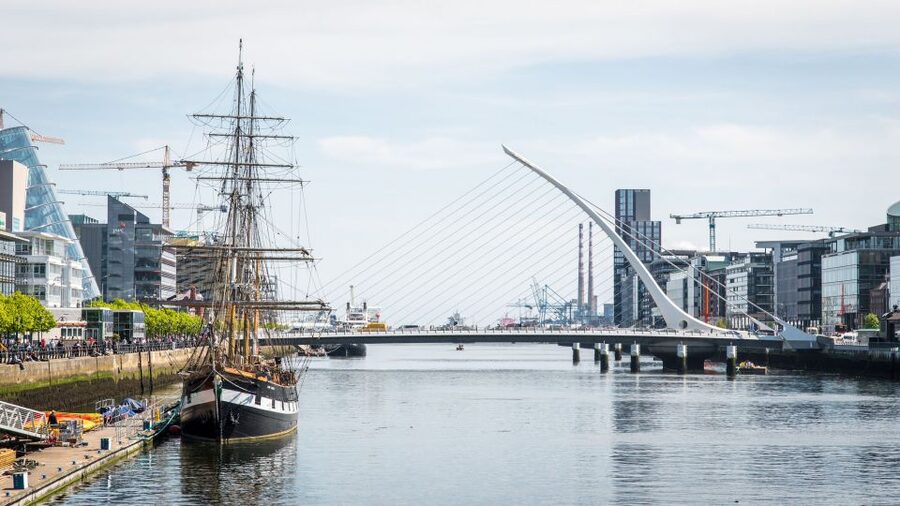
The Jeanie Johnston tells Ireland’s famine story from the deck of an actual tall ship replica, not from behind a glass case. You’ll hear how one million Irish people left during the famine years, then go below deck to picture up to 250 passengers living in tight, grim conditions.
I like two things especially: the personal stories give the history a human face, and the 50-minute format delivers plenty without eating half your day. Guides including Steve, Claire, Eoin, Katrina, and Owen have been praised for clear storytelling and for handling questions well. The main drawback is practical: stairs, tight spaces, and shipboard movement make this a poor choice for wheelchair users or anyone with limited mobility.
Key points to know before boarding
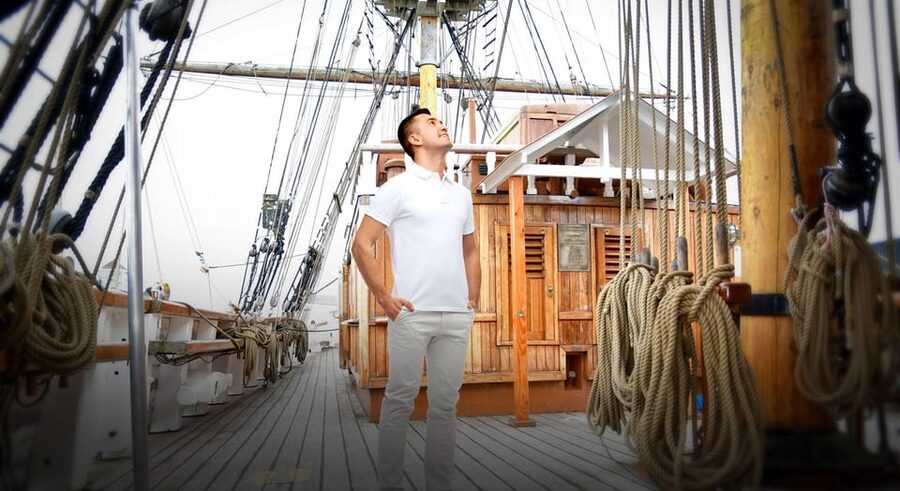
- You see a tall ship from both sides of the story: Start above deck with the masts, timber construction, and Docklands views, then go below to the passenger quarters.
- The tour focuses on people, not only dates: You hear how passengers paid for their crossing, what they ate, how they passed the time, and what awaited them overseas.
- The original ship carried people after transporting timber: That change in purpose helps explain the hard conditions of famine-era migration.
- The guide makes or breaks the visit: Steve, Claire, Eoin, Katrina, Owen, and others have been praised for humor, clear explanations, and involving children in the story.
- The Jeanie Johnston had an unusual record: Across 16 voyages to America, nobody died aboard, even though disease, starvation, and shipwreck were real threats on famine ships.
- Allow for a short, focused visit: The tour lasts 50 minutes and begins and ends at the ship on Custom House Quay.
Why the Jeanie Johnston matters in Dublin
The Great Famine was not simply a bad harvest. It forced families into choices that would have been unthinkable in better times. Food shortages, poverty, and the failure of the potato crop pushed roughly one million people to leave Ireland. For many, the Atlantic crossing was the price of a possible future.
The Jeanie Johnston gives that story a physical setting. You are not looking at a scale model and trying to guess how small it was. You are standing on the decks and moving through the cramped areas where passengers spent most of a long ocean voyage.
That physical setting matters. A number on a museum panel can be hard to grasp. A low, crowded space makes the scale of the journey easier to picture. The ship also places the famine story within Dublin’s Docklands, an area shaped by shipping, trade, departure, and arrival.
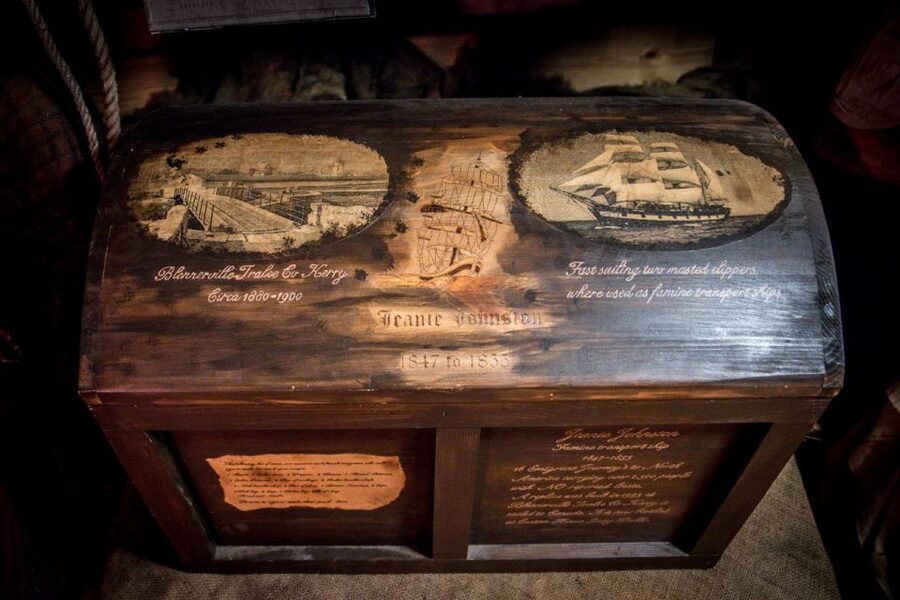
The vessel you see is a replica of the original Jeanie Johnston, but the tour explains the original ship and its working life. It first carried timber, then changed roles and transported emigrants. That shift says a lot about the 19th-century shipping trade and the economic pressures surrounding Irish migration.
More Tall Ship Sailing in the world:
- Key West Schooner Sunset Sail with Bar & Hors d’oeuvres
★ 5.0 · 804 reviews - Toronto Tall Ship Boat Cruise
★ 4.5 · 676 reviews - Hilton Head Pirate Ship Adventure Sail aboard the Black Dagger
★ 5.0 · 668 reviews
Starting above deck with the masts and Docklands views
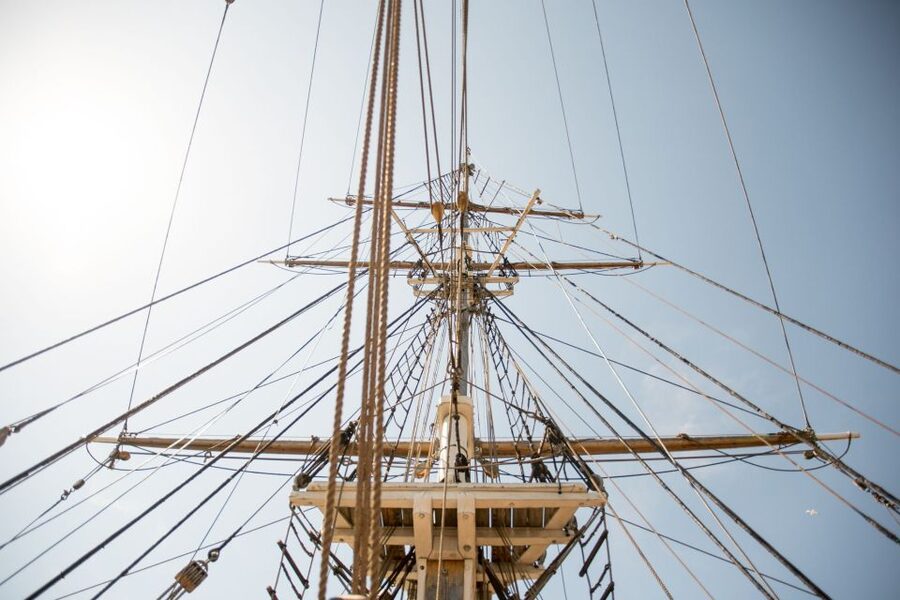
The tour begins on the upper deck. This is the lighter part of the visit, both in mood and in physical space. You can look at the masts, inspect the workmanship, and take in the sounds of Dublin’s Docklands around you.
The views are part of the point. You get a different angle on the city from the water, with wind, sea air, and gulls helping you picture the ship as a working vessel rather than a stationary attraction. It is also a good place for photographs, since the Jeanie Johnston is one of the most photographed sights in this part of Dublin.
Your guide explains the history of tall ships and the shipping trade during the 19th century. This gives useful context before the tour turns to the passengers. You learn why a ship built for cargo became part of the movement of desperate people across the Atlantic.
I like this opening because it prevents the experience from becoming only a below-deck misery tour. You first see the ship as a piece of engineering. The masts, deck, and timber construction show what made long-distance sailing possible. Then the human cost of that system becomes easier to understand.
The upper deck is also where the tour can feel most relaxed. If you are visiting with children, this section offers something visual and immediate before the more serious story begins. One guide, Katrina, was praised for including children in the discussion, while Catriona was noted for answering a 10-year-old’s questions and helping him feel comfortable around the ship’s mannequins.
Going below deck into cramped passenger quarters
The emotional center of the visit is below deck. Here you see the tight living quarters where as many as 250 passengers spent most of their time. The information given on the tour explains that passengers were allowed only about half an hour of fresh air each day.
This is where the word voyage stops sounding romantic. You can picture people sleeping, eating, waiting, and trying to stay healthy in a confined area for weeks at sea. Conditions were cramped and filthy, and passengers faced disease, starvation, and the possibility of disaster.
The below-deck section is not long, but it does not need to be. The limited space makes the point quickly. You may find yourself paying more attention to the height of the ceiling, the narrowness of the quarters, and the number of people the ship was expected to carry.
The mannequins help represent the passengers and crew. They may not appeal to every child, and one family needed help getting a young visitor past his fear of them. Still, they give the spaces a human scale. The guide’s storytelling does most of the work, using individual lives to show how people experienced the journey.
You learn what passengers ate and how they passed the time. You also hear how they paid for their passage. Those details are important because they show that emigration was not a simple matter of buying a ticket and leaving. Families had to find a way to pay for the crossing during a period of severe hardship.
The guide also explains what happened at the destination. The Atlantic crossing was only one stage. Once passengers arrived, they faced uncertain futures and had to build new lives far from home.
The personal stories make the famine understandable
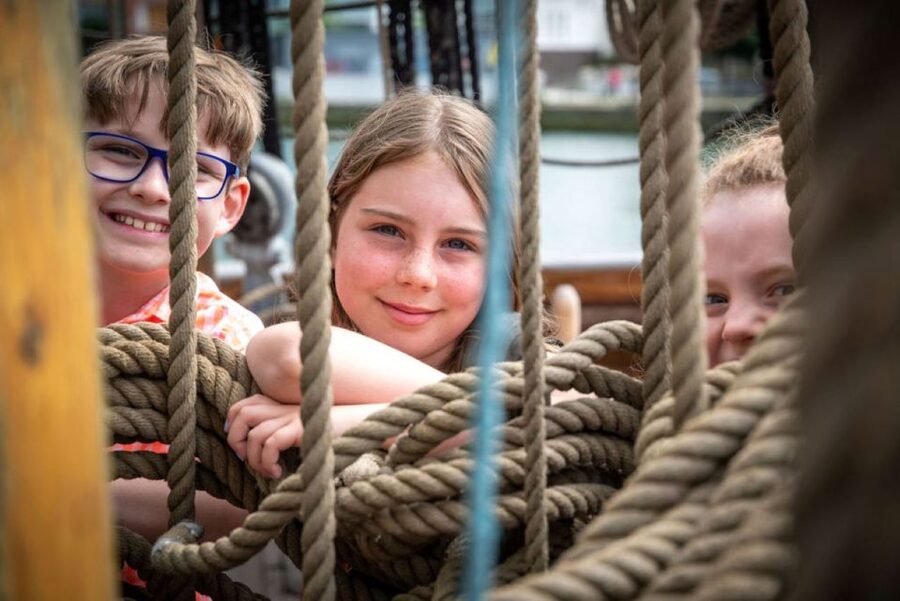
The strongest feature of this tour is its use of individual passenger and crew stories. Broad history explains the scale of the famine. Personal stories explain what that scale meant inside one family, one bunk, or one difficult decision.
The tour introduces people connected with the ship and shares what is known about their lives. You hear about their reasons for leaving, the cost of their crossing, the food available aboard, and the risks they faced. This approach keeps the experience from becoming a list of dates.
Several guides have been praised for balancing seriousness with humor. That balance matters. The subject is painful, but a guide who speaks in a natural way can keep you attentive without making the tour feel cold or overly formal.
Steve has been particularly effective with mixed-age groups, explaining the famine in a way that held the attention of children from 7 to 15. Claire has been praised for being both funny and well informed. Eoin was noted for combining seriousness, humor, and clear explanations. Owen was praised for answering questions in detail.
Guide quality can vary from one departure to another, but the experience depends heavily on that live narration. The ship provides the setting. The guide connects the setting to the people who crossed the sea.
More History Tours in the world:
- Historical San Juan Bay Sunset Sailing Tour
★ 4.5 · 710 reviews - Lisbon Sunset Sailing with Portuguese Wine and History
★ 5.0 · 668 reviews - Lisbon: Sunset Sailing with Portuguese Wine and History
★ 5.0 · 270 reviews - Nydri: Sailing Through History. Daily Cruise with Beach BBQ
★ 4.9 · 253 reviews
An unusual record across 16 voyages
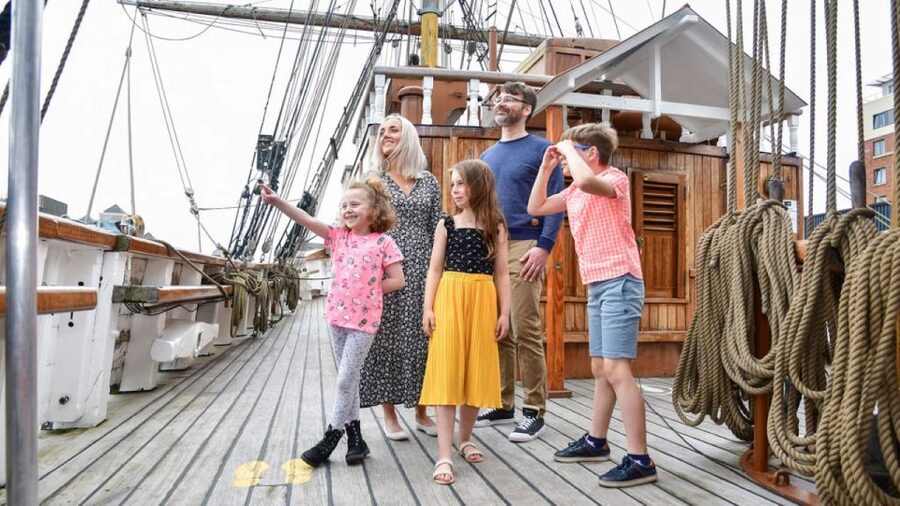
One detail gives the Jeanie Johnston story an unexpected turn. The original ship made 16 voyages to America, and nobody died aboard. That does not make the journeys easy or safe. It makes the achievement more striking when set against the disease, hunger, and poor conditions common on famine-era ships.
The tour places this record alongside the larger dangers of the period. Many people fleeing Ireland faced terrible conditions at sea, and the phrase coffin ship is part of the wider history of famine migration. The Jeanie Johnston’s record offers a contrast without erasing the suffering of its passengers.
I find this detail especially useful because it prevents the tour from presenting every famine ship as exactly the same. The broader conditions were severe, but individual ships, crews, and voyages had different outcomes. That distinction makes the history more accurate.
You also hear about the crew, not only the passengers. Their work kept the ship moving and shaped daily life aboard. By meeting both groups through the guide’s stories, you get a fuller picture of the voyage and the people responsible for surviving it.
How much time and money should you set aside?
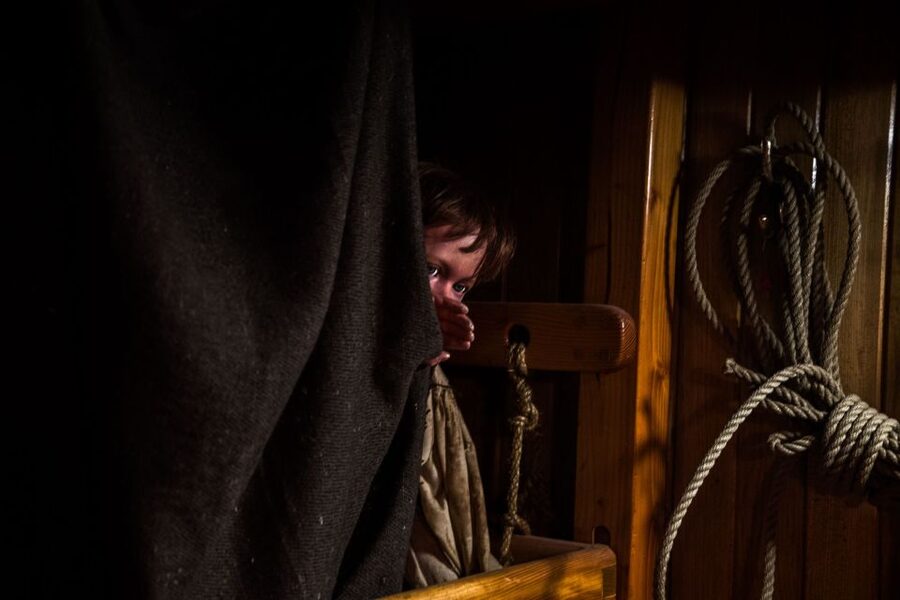
The tour costs $16 per person and lasts 50 minutes. For a central Dublin attraction with a live guide and access to both decks, I consider that a fair price, especially if you want a focused history experience rather than a large museum visit.
The short duration is a practical advantage. You can fit the Jeanie Johnston into a day of sightseeing around Dublin’s Docklands without giving up an entire morning or afternoon. It also works well for families and for visitors who prefer one clear subject at a time.
The tradeoff is that 50 minutes leaves little room to linger. You will follow the guide’s pace, and the tour does not appear designed as a long, self-guided visit. If you want extensive time for quiet reading or detailed ship inspection, this may feel brief.
The price also makes more sense if you value interpretation. You are paying for access to the ship and for a guide who explains how the vessel worked, what passengers endured, and what happened after arrival. The strongest part is not simply walking around the timber structure. It is understanding what you are seeing.
Free cancellation is available up to 24 hours before the start, and you can reserve now and pay later. Those terms are useful if your Dublin plans are still shifting.
Who will enjoy this tour most?
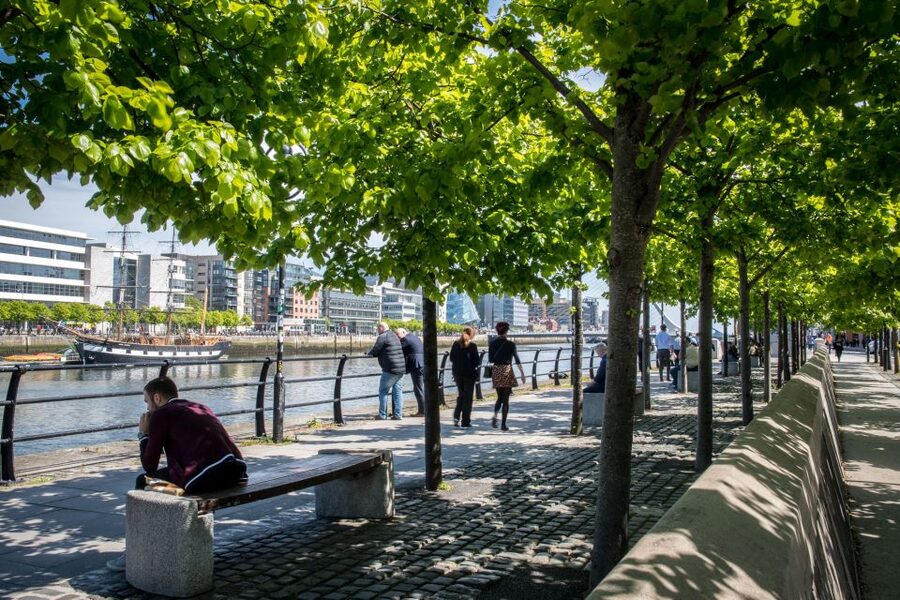
I would recommend the Jeanie Johnston to anyone interested in Irish history, migration, maritime trade, or family roots. It is especially useful if you want to understand the famine through ordinary people rather than through politics and statistics alone.
Families can also make good use of the visit. Guides have successfully kept children and teenagers involved, even when they asked many questions or needed help with the mannequins. The serious subject is not softened, but it is explained in a way that can work for different ages.
The tour suits visitors who like a clear, guided story. You do not need prior knowledge of Irish history. The guide explains the famine, the ship’s earlier work carrying timber, the passenger experience, and the voyage across the Atlantic.
It is less suitable if you have limited mobility. The tour is not recommended for people with mobility impairments or for wheelchair users. You should also wear comfortable shoes, since you will be moving around a ship and using its interior spaces.
Practical details at Custom House Quay
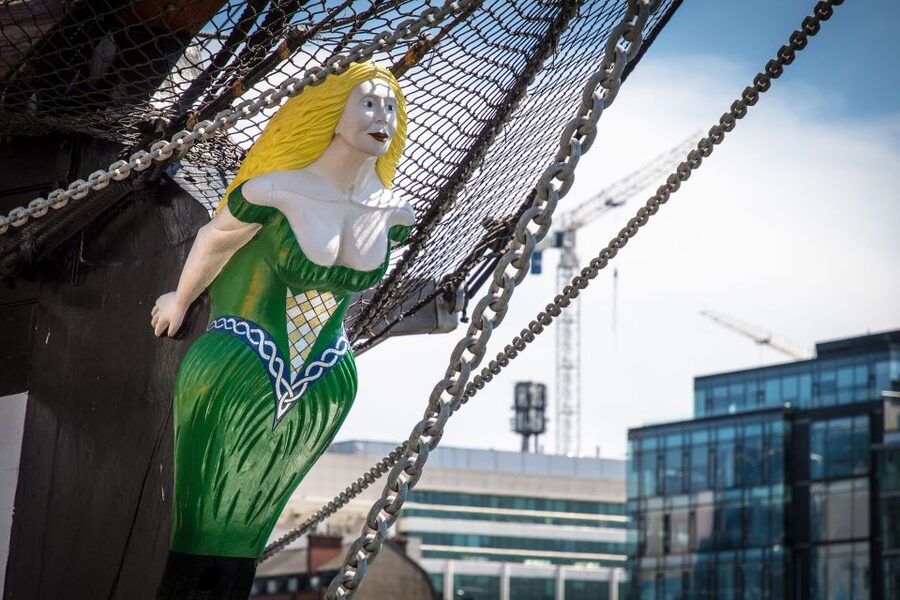
The meeting point is the Jeanie Johnston Tallship at City Moorings, Custom House Quay, Dublin 1. The activity ends back at the same place, so you do not need to arrange a separate return transfer.
There is no hotel pickup or drop-off. Plan to reach the ship independently and check the available start times when booking. Since the visit is only 50 minutes, it is easy to place before or after other Dublin plans, but leave enough time to find the meeting point without rushing.
The live tour is conducted in English. If you want the full value of the visit, pay close attention to the guide rather than treating the ship as a photo stop. The photographs are worthwhile, but the personal stories are what turn the visit into a meaningful history lesson.
Should you book the Jeanie Johnston?
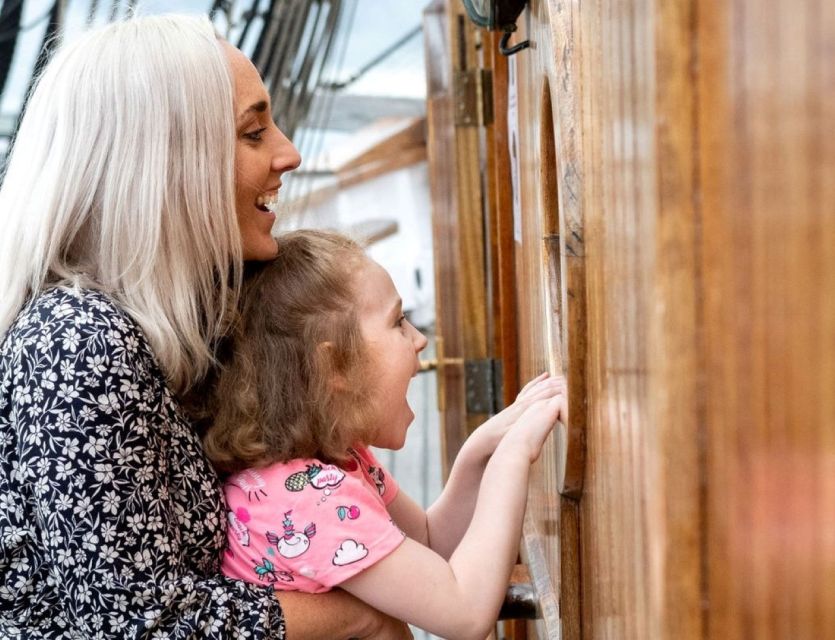
I would book it if you want a compact Dublin experience with real emotional weight. The ship gives you a strong sense of place, the Docklands setting adds context, and the guides bring the famine story down to the level of individual families.
Book it especially if you are traveling with children or teenagers who respond better to objects and stories than to a formal museum display. The visit is short enough to hold attention, yet serious enough to leave you with a clearer understanding of Irish emigration.
Skip it if stairs and confined spaces will make the visit uncomfortable, or if you are looking for a long, detailed maritime tour. For most visitors who can manage the ship’s layout, $16 buys a focused and memorable look at one of Ireland’s hardest chapters.
FAQ
How long does the Jeanie Johnston tour last?
The guided visit lasts 50 minutes. Check availability for the specific starting times on your chosen date.
Where does the tour begin and end?
It begins at the Jeanie Johnston Tallship, City Moorings, Custom House Quay, Dublin 1, and ends back at the same meeting point.
What language is the tour conducted in?
The live guided tour is conducted in English.
What does the tour include?
Your ticket includes entrance to the Jeanie Johnston and access to the guided tall ship tour. Hotel pickup and drop-off are not included.
Is the tour suitable for wheelchair users?
No. The experience is not suitable for wheelchair users or people with limited mobility.
Can I cancel the booking?
Yes. You can cancel up to 24 hours in advance for a full refund. You can also reserve now and pay later.
Just added around the world
- Sunset sailing by Felucca in Luxor -2 Hours (Private)★ 5.0 · 2 reviews
- Felucca Sailing Boat, Visit to Karnak and Luxor Temples★ 5.0 · 3 reviews
- Amazing Sailing Nile cruise from Luxor for 2 Nights★ 4.5 · 16 reviews
- Sail into Splendor: Luxor’s Majestic Motor Boat Adventures★ 5.0 · 14 reviews
- Oyster Bay Two Hour Sailing Experience★ 5.0 · 2 reviews
- Morning Sailing Tour in Tagus River from Lisbon★ 5.0 · 68 reviews
- Public Schooner Sail in Greenport★ 5.0 · 8 reviews
- Captain Steve’s Sailing Experience on Long Island★ 5.0 · 10 reviews
Tall Ship and Schooner Sailing, side by side.
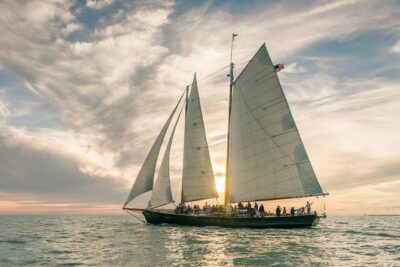
Key West Schooner Sunset Sail with Bar & Hors d’oeuvres
Read our review →
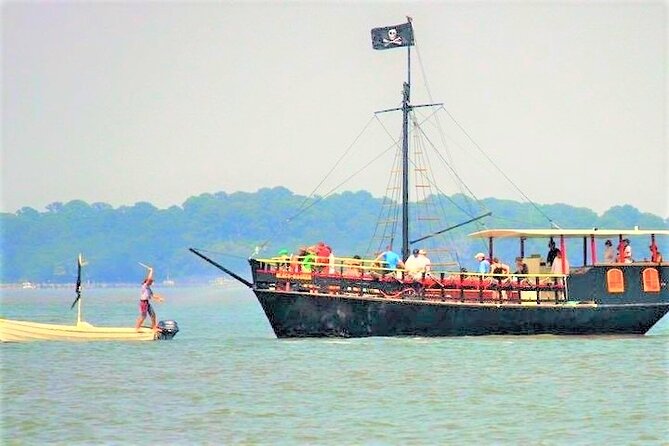
Hilton Head Pirate Ship Adventure Sail aboard the Black Dagger
Read our review →
Afternoon Schooner Sightseeing Dolphin Cruise on Charleston Harbor
Read our review →
Sydney Harbour Tall Ship Twilight Dinner Cruise
Read our review →
This sailing also appears in