
REVIEW · ASWAN
Nile cruise between Aswan and Luxor: Sail the best temples in Egypt
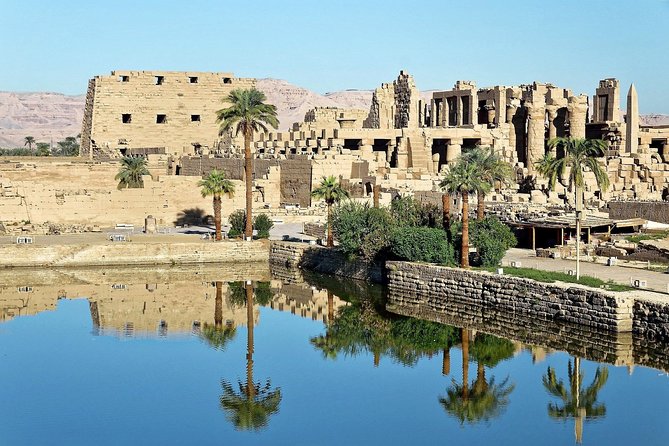
The best part of this Aswan to Luxor cruise is the way major Egyptian monuments arrive in a natural sequence, with quiet hours on the Nile between them. You can visit Philae by boat, watch the riverbank pass from the ship, then walk through temples at Kom Ombo, Edfu, Karnak, and Luxor.
I like the broad historical coverage and the practical pickup and drop-off service. I also like the guiding style associated with Mohamed Gaber, or Moha, whose Spanish explanations, theatrical touches, and attention to the group are repeatedly praised. The main drawback is that Abu Simbel costs extra, and the schedule can feel full once you add the early start and several long temple visits.
Key points to know before booking
- Four nights on the Nile: You settle into the boat in Aswan and travel north toward Luxor, with meals included.
- Seven major sites: The route includes Philae, Kom Ombo, Edfu, Karnak, Luxor Temple, the Valley of the Kings, and Hatshepsut’s temple.
- Abu Simbel is optional: It is not included in the ticket price, but it is the trip’s most important extra outing for many visitors.
- A guide can make the difference: Mohamed Gaber, known as Moha, is praised for Spanish fluency, clear explanations, humor, and personal care.
- Simple end-to-end transfers: Pickup is offered in Aswan from an airport, station, or hotel, with a transfer to your chosen destination in Luxor.
- Good value at $500: The price includes four nights, meals, admissions, guided visits, and transfers, but not drinks, tips, or Abu Simbel.
Why this Nile route works so well
A Nile cruise is not just a hotel that happens to move. It gives your Egypt sightseeing a useful rhythm. You visit one major site, return to the boat, eat, rest, and watch the river change outside your window. That break matters in Egypt, where temple visits often involve sun, stone, long walks, and a lot of information.
This route runs from Aswan to Luxor, one of the most rewarding sections of the river. Aswan feels slower and more open. Luxor delivers a concentrated run of temples and royal tombs. Between the two, you get the island setting of Philae, the unusual double temple at Kom Ombo, and the beautifully preserved Temple of Horus at Edfu.
The advertised price is $500 per person. For that amount, you receive four nights aboard the cruise, lunch and dinner for four days, entrance tickets for the listed sites, pickup in Aswan, and a transfer in Luxor. That is a useful package if you want one booking to handle the main logistics.
The trip is described as four days, while the inclusions specify four nights aboard the cruise. Since cruise schedules can be stated in different ways, I would confirm the exact boarding and checkout times before paying. The listed start time is 6:00 am, so this is not a late-start holiday.
More Nile Felucca Sailing in Aswan:
- 4-Day Nile Cruise sails Aswan to Luxor&Abu Simbel.Hot air Balloon
★ 4.5 · 247 reviews - Sailing Nile Cruise from Aswan to Luxor for 2 Nights
★ 4.5 · 139 reviews - 4-Days Aswan sails Nile Cruise Luxor &Abu Simbel.Hot air Balloon
★ 4.5 · 77 reviews
Day one in Aswan: settle in before the monuments begin
Your first day begins with pickup in Aswan. The operator can collect you from the airport, train station, or hotel at the time and place you provide, then take you to the boat. Once aboard, you can settle into your room and follow the meal schedule.
The first day is intentionally light. You have free time to rest by the pool or explore Aswan independently. I consider that a useful feature, not wasted time. Aswan is a good place to slow down after a flight or train ride, and a calm first afternoon helps you avoid starting the cruise already tired.
Do not expect a full guided city tour on this day. The supplied plan leaves Aswan open for you to handle on your own. If you want a specific visit before sailing, ask about timing in advance rather than assuming it is part of the package.
The boat becomes your base for the rest of the trip. Meals are included, but drinks are not, and tips are also outside the price. Keep those small extra costs in mind when working out your budget.
Abu Simbel: the optional outing worth serious thought
Abu Simbel is listed as an optional excursion, with admission not included. The visit takes about two hours. You see the rock-cut temples built during the reign of Ramses II, including the temple dedicated to Ramses and the nearby temple of Nefertari.
The practical question is not simply if Abu Simbel is worth seeing. It is also how much extra time and money you want to add to a schedule that already includes several major sites. The operator itself calls this outing a must, and I understand why. The monumental facades and their remote setting give Abu Simbel a different feel from the river temples.
Still, do not assume the $500 price covers it. You will need to pay the admission separately, and the description does not give the price or exact transport details. Ask for those details before booking so you know the true total.
Philae Temple: an island setting with a graceful start
Philae is dedicated to Isis and sits on an island, so you reach it by boat. The visit lasts about an hour, and admission is included.
That short boat ride is part of the appeal. Philae does not feel like a monument beside a busy road. The water crossing gives the visit a sense of arrival, and the temple’s setting makes it easy to connect the ancient site with the river that shaped Egyptian life.
An hour is enough for a focused visit, especially with a guide explaining the gods, reliefs, and royal symbols. It is not enough for a slow, solitary study of every wall. If you like photography, keep your camera ready during the approach and allow yourself a few quiet minutes after the main explanation.
A few more sailing tours around Aswan worth a look
- 4-Days Nile Cruise sails Aswan to Luxor &Abu Simbel. Balloon tour
★ 5.0 · 49 reviews - Aswan Private Felucca Ride: Sail Around Elephantine Island.
★ 4.5 · 44 reviews - 4-Days Nile Cruise sails Aswan to Luxor &Abu Simbel. Air Balloon
★ 5.0 · 26 reviews - Sailing Nile cruise from Aswan to Luxor includes tours for 3 nights
★ 5.0 · 16 reviews
Kom Ombo: two gods, one unusual temple
Kom Ombo takes about an hour and is included in the price. Its central feature is that it was built for two gods, Sobek and Haroeris.
That shared design gives the site a clear story to follow. Instead of seeing another temple with a long list of rulers and rituals, you can focus on the balance between the two deities and the way the building served both traditions.
The visit is relatively short, which helps the pace of the cruise. You get a distinct site without spending half a day on it. At the same time, the schedule means you will rely on the guide to point out the details that make Kom Ombo special.
Edfu Temple: the best-preserved stop on the river
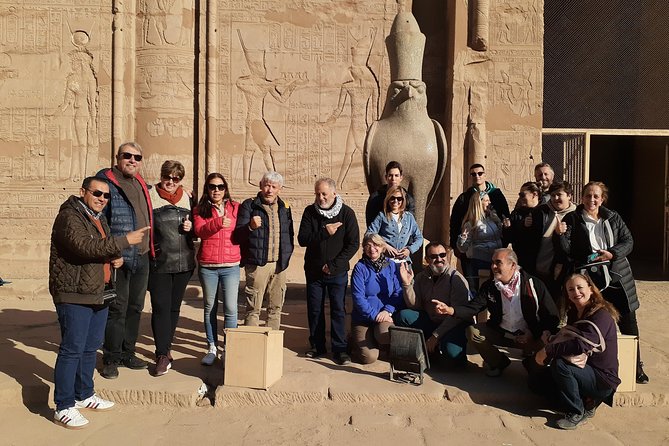
Edfu is dedicated to Horus and receives about two hours. Admission is included. It is described as one of the best-preserved temples in ancient Egypt, and that condition gives you a better sense of how a large temple once looked as a complete place rather than a scattered ruin.
Two hours is a sensible amount of time here. You can walk through the major spaces, look closely at the carved walls, and listen to the explanation without rushing every few minutes. Horus, the temple’s design, and the religious stories provide a strong subject for a good guide.
This is one of the stops where guiding matters most. Egyptian temples can overwhelm you with names and symbols. A clear explanation helps turn columns and reliefs into a story you can remember.
Karnak and Luxor Temple: the full force of ancient Thebes
Day three brings the major temple pair in Luxor. Karnak receives about two hours, followed by two hours at Luxor Temple. Both admissions are included.
Karnak grew over more than 2,000 years under different pharaohs. Its famous features include the avenue of sphinxes, the forest of columns in the Great Hypostyle Hall, and the avenue of rams. The scale can be hard to grasp from a quick walk-through, so listen for the connections between rulers, gods, and building campaigns.
I would expect Karnak to feel like the most demanding temple visit on the schedule. There is a lot to see, and the stone surfaces can be tiring in strong sun. Wear practical shoes and keep water available, remembering that drinks are not included in the cruise price.
Luxor Temple offers a different experience. It was built in honor of Amun-Ra, one of the most important gods in the Egyptian pantheon. Its placement within modern Luxor gives it a more direct relationship with the living city than the remote royal tombs you visit the next day.
The two-hour visit allows time for explanation and photographs. Taken together, Karnak and Luxor Temple give you a useful picture of ancient Thebes, from its vast religious center to the ceremonial temple at the heart of the city.
The Valley of the Kings: choose three tombs carefully
Day four begins with the Valley of the Kings. This royal cemetery contains the tombs of many pharaohs of the New Kingdom, as well as the tomb associated with Queen Hatshepsut. Admission is included, and you can enter three tombs of your choice during the two-hour visit.
That choice is important. You are not promised entry to every tomb in the valley. The included arrangement allows three, so ask your guide which ones are open and how their decoration differs. The best selection depends on current access and your interests, and the supplied information does not name a fixed set of tombs.
Inside, expect enclosed spaces, painted decoration, and a very different atmosphere from the open courtyards of Karnak or Edfu. The tombs are about ritual, burial, and the pharaoh’s journey after death. A guide can help you read the scenes instead of seeing them as a blur of figures and hieroglyphs.
The visit lasts two hours, but the amount you see depends on walking pace and the tombs available. This is another stop where the early 6:00 am start can help. The schedule is busy, but an early beginning gives you more room to visit the sites before the day feels long.
Hatshepsut and the Colossi of Memnon
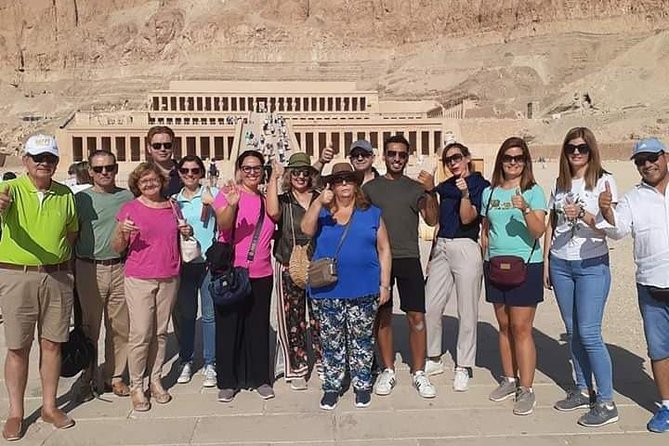
The Mortuary Temple of Hatshepsut follows the Valley of the Kings. The visit takes about an hour and is included. Hatshepsut was one of Egypt’s most important queens, and the temple is presented as one of the great monuments of ancient Egypt.
The building’s broad terraces and dramatic position give you a change of pace after the enclosed tombs. The most useful part of the visit is learning how Hatshepsut presented her authority and how the temple served her mortuary cult. This is a place where political history and architecture meet.
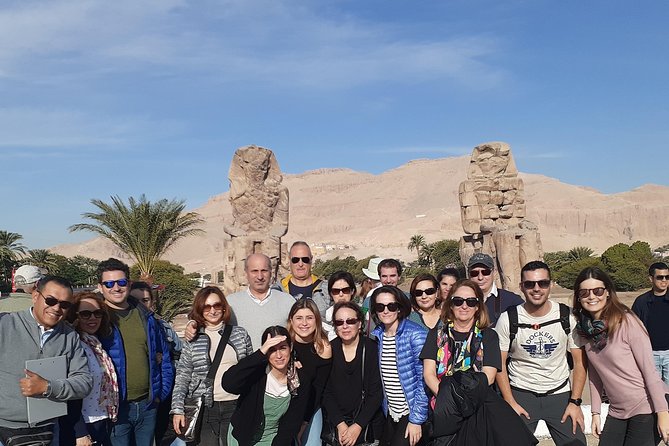
The Colossi of Memnon are a quick stop, about 15 minutes, with no separate admission charge. These two enormous stone statues represent Pharaoh Amenhotep III. Fifteen minutes is enough for a look and photographs, but not a full guided visit. Treat it as a brief final monument before the transfer into Luxor.
Luxor checkout and the final free afternoon
After the morning visits, you check out and have free time in Luxor. The operator will take you to the airport, station, hotel, or another destination you specify when you need it.
This flexibility is useful if you are continuing to another part of Egypt. It also means the cruise does not necessarily end the moment you leave the boat. You can use the remaining time for your own plans, but no specific Luxor activity is included in the free period.
The trip gives you a lot of guided sightseeing, yet it does not turn every hour into a scheduled activity. I like that balance. You get help with the important monuments and transport, while still retaining some control over your time.
The guide can shape the whole experience
The strongest praise centers on Mohamed Gaber, often called Moha. His style is described as warm, attentive, humorous, and highly detailed. He is also praised for strong Spanish and for using small theatrical scenes to make explanations easier to follow.
That matters in Egypt. The names of gods can blur together, and the relationships among pharaohs, queens, temples, and burial traditions are not always easy to follow from a guidebook paragraph. A guide who can explain the material clearly, and keep the group involved, adds real value.
Ask specifically if Mohamed Gaber will lead your departure. The supplied information does not guarantee that every booking includes him, so it is sensible to confirm the guide arrangement if his Spanish explanations or teaching style are important to you.
The group size can reach 30 people. That is not a private tour, and you should expect a shared experience at the sites. A group of that size can make explanations livelier, but it may also require patience when gathering for transfers or moving through narrow spaces.
What the $500 price really covers
At $500 per person, the package includes:
- Four nights aboard the cruise
- Pickup in Aswan
- Transfers in Luxor
- Lunch and dinner for four days
- Entrance tickets for the listed attractions
- Visits to the temples and tombs described in the program
Tips and drinks are not included. Abu Simbel admission is also excluded, and the optional excursion may carry other additional costs that you should confirm before booking.
The value is strongest if you want to avoid arranging several separate transfers and admissions. You are paying not only for a room on the Nile, but also for the route, the site access, the meals, and the movement between Aswan and Luxor.
It is less suitable if you want a private itinerary, long unplanned stops, or complete control over your daily schedule. The program is efficient and full, not leisurely in the sense of spending an entire afternoon at one temple.
Who should book this cruise
I would recommend it to a first-time visitor who wants the main Aswan to Luxor sights in one organized trip. Families may appreciate the transfers and the guide’s ability to make ancient religion easier for younger visitors to follow. Spanish-speaking visitors should ask about Mohamed Gaber, since his language skills and lively teaching style may be a major advantage.
It also suits anyone who likes a mix of structured sightseeing and downtime aboard the boat. The free first day in Aswan and the free time in Luxor give you some breathing room.
You should think twice if you dislike early starts, shared groups, or busy sightseeing days. You also need to budget for drinks, tips, and Abu Simbel. The cruise is designed to show you a great deal in a short time, and that comes with a full schedule.
Final verdict: a strong first Nile cruise with one important extra
Book this cruise if you want the core Nile route handled for you, with major admissions, meals, accommodation, and transfers in one $500 package. The mix of river travel, island temples, preserved sanctuaries, royal tombs, and free time is well judged.
Before committing, confirm the exact four-night schedule, the guide assigned to your group, and the full cost of Abu Simbel. If those details suit you, this is a practical and rewarding way to connect Aswan and Luxor without spending your trip arranging every movement yourself.
FAQ
Where does the cruise begin and end?
The cruise begins in Aswan, Egypt, and ends in Luxor Governorate. Pickup is offered in Aswan, and the operator provides a transfer in Luxor to the airport, station, hotel, or another location you specify.
What time does the experience start?
The listed start time is 6:00 am.
How long is the cruise?
The experience is described as lasting approximately four days, while the inclusions specify four nights aboard the cruise. Confirm the exact boarding and checkout schedule when booking.
Is Abu Simbel included?
No. Abu Simbel is an optional excursion, and its admission ticket is not included.
Which meals are included?
Lunch and dinner are included for four days. Drinks are not included.
Are entrance tickets included?
Tickets for the listed visits are included, including Philae, Kom Ombo, Edfu, Karnak, Luxor Temple, the Valley of the Kings, and the Mortuary Temple of Hatshepsut. Abu Simbel admission is not included.
How many people can join the group?
The maximum group size is 30 people.
Can I cancel for a full refund?
Yes. You must cancel at least three full days before the experience start time for a full refund. Cancellations or changes made less than three full days in advance are not accepted for a refund.
Just added around Aswan
- Sailing Nile cruise from Aswan to Luxor includes tours for 3 nights★ 5.0 · 16 reviews
- Sailing Nile cruise from Aswan for 2 nights★ 4.0 · 11 reviews
- Sail Through Time:Unforgettable Felucca Ride on the Nile in Aswan★ 5.0 · 15 reviews
- 4-Days Nile Cruise sails Aswan to Luxor &Abu Simbel. Air Balloon★ 5.0 · 26 reviews
- Enjoy Sailing Nile Cruise From Aswan To Luxor For 2 nights With Luxor Tours★ 4.0 · 8 reviews
- Private 1-Hour Felucca Sailing and Botanical Garden In Aswan★ 3.5 · 15 reviews
- Budget Sailing Nile cruise from Aswan to Luxor for 2 nights★ 4.0 · 4 reviews
- Budget Egypt Sailing Nile cruise from Aswan to Luxor for 3 nights Special Offer★ 4.0 · 4 reviews
Nile Felucca Sailing, side by side.
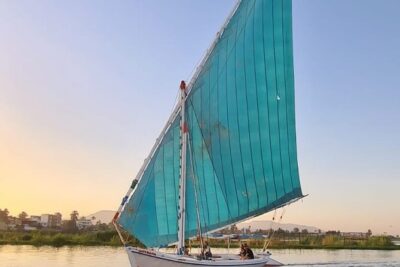
Amazing Sunset sailing by Felucca in Luxor -2 Hours (Private)
Read our review →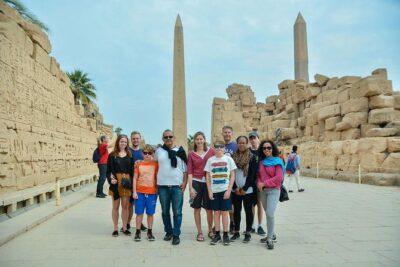
4-Day Nile Cruise sails Aswan to Luxor&Abu Simbel.Hot air Balloon
Read our review →
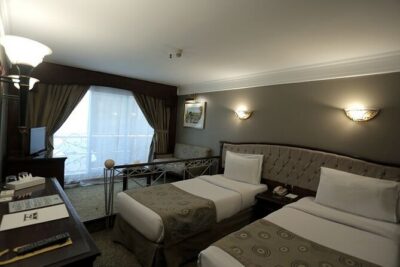
Sailing Nile Cruise from Aswan to Luxor for 2 Nights
Read our review →
Nile cruise between Luxor and Aswan: Sail the best temples in Egypt
Read our review →
Coptic Cairo, Mosques , sailing on Nile and Bazaar Private Tour with Lunch
Read our review →
Private Day Tour To Luxor from Cairo by Plane,Tours,Sailing Felucca,Camel&Lunch
Read our review →
Aswan Private Felucca Ride: Sail Around Elephantine Island.
Read our review →This sailing also appears in